Governments named main perpretators of grave violations against children for first time in 30 years as record numbers of children affected
June 18, 2026
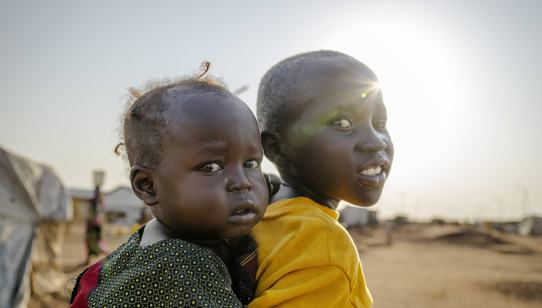
A record 24,174 children suffered grave violations of their rights in armed conflict in 2025 - an eight percent rise on the previous year - according to the United Nations (UN) Secretary-General's annual report on children and armed conflict. For the first time in history, government forces were identified as the primary perpetrators of these violations. For the fourth consecutive year, governments were primarily responsible for the killing and maiming of children, attacks on schools and hospitals, and denial of humanitarian access. In 2025, the killing of children surged by 34% and maiming by 10%, violence carried out primarily by the very governments that signed up to protect them.
The findings represent a stark shift from when the UN began this reporting process when attention focused largely on non-state armed groups. Today, it is increasingly governments - with their airpower, drones, and precision weapons - that are responsible for the most serious harms across 23 countries monitored. These weapons are too often deployed in ways that kill and maim civilians, including children, on a massive scale, in clear violation of obligations under international humanitarian law.
Not only are 1 in 5 children worldwide living in conflict zones, but a record number are now having their most basic rights violated in the process. The consequences for children are severe and lasting: lifelong physical disabilities from explosive weapons, amputations, and untreated injuries, acute malnutrition from blocked aid, and the destruction of the schools and health systems communities depend on to recover.
These figures do not capture what young people living through conflict describe as equally devastating: the constant fear, the grief, control of their communities, the loss of safe spaces, repeated displacement, and the unrelenting impact on their mental health and emotional wellbeing.
Valentina, a youth advocate from Colombia, told War Child, “This is also a way of experiencing the conflict, and it is harm, even if it is not reflected in the statistics or reports."
Rocco Blume, Head of Advocacy at the War Child Alliance said; “This report is making history for all the wrong reasons. A record number of children affected. Governments named as leading perpetrators for the first time in three decades, and for the fourth-year running, primarily responsible for killing and maiming children, attacking their schools and hospitals, and blocking humanitarian aid.
Many of the governments funding humanitarian responses globally are political allies of those named as perpetrators - and have the leverage to act but are choosing not to. Until donor states are willing to apply real pressure to their allies, attempts to spotlight persistent perpetrators will remain a naming exercise without consequences”.
War Child is calling on all states to uphold their obligations under international humanitarian law, to use their influence to hold listed parties to account, and to stop the flow of arms and support to forces that continue to violate children's rights.
Notes to Editors:
- The UN Secretary-General's Annual Report on Children and Armed Conflict tracks six grave violations: killing and maiming; recruitment as soldiers; sexual violence; abduction; attacks on schools and hospitals; and denial of humanitarian access. The use of the term “grave violations” or “violations” refer to each individual child affected by recruitment and use, killing and maiming, sexual violence and abductions, while the number of incidents is used for attacks on schools and hospitals and the denial of humanitarian access.
- Note on data: Figures are based on UN-verified grave violations against children documented through the CAAC monitoring and reporting mechanism. Verification requirements are stringent, meaning verified figures are likely to underrepresent the actual scale of violations against children in situations of armed conflict.
- In 2024, more than 520 million children – 1 in 5 globally – were living in a conflict zone, according to the Peace Research Institute Oslo (PRIO).
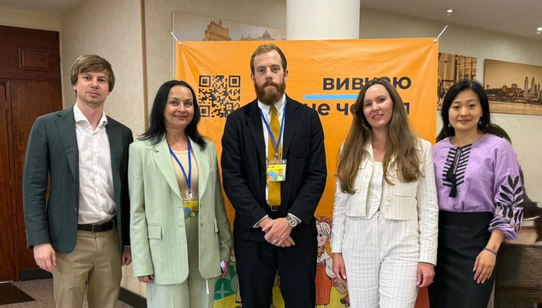
- Valentina (pseudonym) was one of four young advocates from War Child's child-led advocacy programme (VoiceMore) in Colombia and Uganda who presented recommendations from over 100 children and young people to UN Member States and civil society at an international Children and Armed Conflict conference in Malta last month.
- Rocco Blume, Head of Advocacy at the War Child Alliance Foundation is available for interviews.
For interviews or further information, contact: Lucy Hawkins, Media and Campaigns Manager, +44 7545 878637